
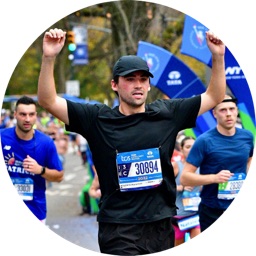
- Light at the End of the Tunnel Marathon has a 42% BQ rate, the highest of any PNW race, but demands remote logistics and a fall training block.
- Eugene Marathon offers the region's best spring BQ option at 26%, with a large field, pace groups, and a finish at Hayward Field.
- The Tunnel Marathon matches the tunnel experience at 39% BQ rate but runs slightly warmer and draws a larger field than its rival.
- Portland and Bellingham Bay are welcoming city races with broad fields, but their 5% BQ rates reflect mixed-goal audiences, not course speed.
Why the Pacific Northwest punches above its weight for BQ runners
Most runners outside the region think of the PNW as mountains, rain, and Seattle's hills. They're not wrong about Seattle, which is hilly enough to be a recreational run rather than a BQ attempt. But the competitive racing infrastructure in Oregon and Washington is something else entirely.
The climate is a genuine advantage. Eugene's average high in late April sits around 60°F. Bellingham runs about 67°F in September. Those numbers put most PNW races squarely in the range where marathon performances peak. You're not fighting heat. You're not gambling on a cold snap. You're just running.
The culture matters too. Oregon and Washington produce serious runners in outsized numbers, and serious runners self-select into BQ-friendly races. That inflates measured BQ rates, which is itself a useful signal: a field full of people chasing standards means deeper pace groups, more competitive energy, and a race that takes qualifying seriously.
The race spectrum here covers city loops, quiet rail-trail point-to-points, canyon runs, and two dedicated tunnel races that cut straight through the Cascades. Each type suits a different runner. The rest of this piece ranks them by BQ rate and explains the tradeoffs honestly.
One race to skip before we start: Seattle Marathon. The course is hilly, and the BQ data reflects it. It's a great city experience. It is not a BQ race. Leave it off your shortlist.
The tunnel races: the highest BQ rates in the region
Nothing in the Pacific Northwest produces BQ qualifiers at the rate of these two races. Nothing in most of the country does either.
Light at the End of the Tunnel Marathon runs 42% BQ rate. In a field of 500 runners. At an average high of 56°F. That combination of a self-selected, BQ-focused field and a net drop of 870 feet through a converted rail tunnel in the Cascades produces results that are genuinely unusual. If your only goal is the highest probability of running a qualifier, this is the race.
What makes the tunnel special isn't just the drop. It's the consistency. The course shields you from wind. The gradient is gradual enough to bank free speed without destroying your legs by mile 18, though 870 feet of net descent will still send a message to your quads before you're done. The 56°F average high is close to ideal.
Tunnel Marathon runs a 39% BQ rate with a field of 852 and an average high of 68°F. The BQ rate is still exceptional by any national comparison. The field is larger, which means more company on the course and slightly more race-day infrastructure. The warmer temperature is the one real variable to watch: 68°F is workable, not ideal, and a hot September day can push that higher.
The net drop for Tunnel Marathon is not verified in our data, so we won't assign it a number. What we know is the format: a tunnel-based point-to-point through the Cascades, fall timing, and a BQ rate that puts it in the top tier nationally.
Both races are fall events. Both are remote. Early start times, limited spectator access, and logistical complexity are part of the deal. If you need a crowd, a city, or a beer garden at the finish, look elsewhere. If you need the qualifier, plan accordingly.
- 01Remote location: limited lodging, carpooling often required, early bus shuttles to the start
- 02No spectators mid-course: you are running through a tunnel and a canyon, not a city
- 03Net downhill profile: real speed, but quad fatigue is real by mile 20 if you go out too fast
- 04Small fields: strong BQ culture, but fewer pace options than a large city race
- 05Fall training window: peak mileage lands in July and August, PNW heat is manageable but not nothing
Eugene Marathon: the best spring BQ in the PNW
Eugene Marathon runs 26% BQ rate in a field of 4,536. It finishes at Hayward Field, one of the most famous track venues in American distance running. If you want to know what it feels like to run through a stadium tunnel into a roaring crowd, this is your race.
The course is mostly flat, the average high is 60°F in late April or early May, and the field is deep enough to find a pace group for almost any BQ standard. For a runner planning right now in September for a spring qualifier attempt, Eugene is the obvious answer. It's seven to eight months out, which is exactly the right training horizon.
The 26% BQ rate is lower than the tunnel races, but the comparison is slightly unfair. Eugene's larger, more mixed field naturally pulls the rate down. The course itself is genuinely fast. And the experience, the organization, the pace group depth, the atmosphere, is in a different category from a small tunnel race.
If you're weighing Eugene against California International Marathon for a West Coast qualifier, that's a real decision worth its own analysis. The CIM vs. Eugene Marathon post covers it directly.
Foot Traffic Flat and Newport Oregon: the flat, quiet alternatives
Not every runner wants the logistics of a tunnel race or the size of Eugene. These two Oregon options offer flat courses, cool temperatures, and a low-pressure atmosphere that some runners find genuinely liberating.
Foot Traffic Flat Marathon runs on Sauvie Island near Portland in June. Field of 298. BQ rate of 16%. The course is flat. The vibe is pastoral and relaxed. The average high of 77°F is the one thing to watch: June in the Willamette Valley can run warm, and 77°F is not ideal for a PR attempt. If you get a cool morning, this course will reward you. If you get a warm one, manage expectations.
Newport Marathon (Oregon) runs along the Oregon coast with a 12% BQ rate, a field of 332, and an average high of 58°F. That temperature is close to perfect. The coastal location keeps conditions consistent. The course is flat. It's small enough that you'll know most of the runners around you by mile 10, which is either charming or lonely depending on your personality.
The Yakima River Canyon Marathon in Washington deserves a mention here too. It runs a 12% BQ rate in a field of just 122, along a canyon floor on a point-to-point course. Yakima is ideal if you want a quiet, focused effort with minimal race-day noise. It is not ideal if you have ever needed a pacer or a port-a-potty at mile 18.
Portland and Bellingham Bay: best for first-time BQ chasers
A 5% BQ rate is not a bad course. It's a broad field. Both of these races are flat and fast enough to run a qualifier. The difference is the audience: Portland and Bellingham Bay attract a wide range of runners, most of whom are not chasing a standard, which pulls the rate down.
Portland Marathon runs in October with a field of 3,009 and an average high of 66°F. The course is flat. The city support is excellent. October timing means fall-weather racing without the uncertainty of a September heat event. If you're new to chasing a BQ and want a city race with strong logistics, deep volunteer support, and a real finish-line atmosphere, this is where to start.
Bellingham Bay Marathon runs in September with a field of 286, a 5% BQ rate, and an average high of 67°F along the Puget Sound waterfront. It's the Portland alternative for Washington-based runners who don't want to drive to Eugene or navigate tunnel-race logistics. Flat, scenic, small, and honest.
Quick-reference comparison table
How to choose: a decision framework for PNW runners
Here's the honest version. Every race on this list can produce a BQ. The question is which one fits your goal, your training window, and your tolerance for logistics.
- 01Highest BQ probability, fall timing, logistics are not a problem: Light at the End of the Tunnel Marathon. It's the region's strongest BQ race by the numbers.
- 02Fall tunnel race with a slightly larger field: Tunnel Marathon. Same concept, warmer on average, more company.
- 03Spring qualifier with race-day experience and pace groups: Eugene Marathon. The best spring BQ in the Pacific Northwest, full stop.
- 04Low-key flat race without tunnel logistics: Foot Traffic Flat Marathon (watch the June warmth) or Newport Marathon (Oregon) for consistently cool coastal temps.
- 05Washington-based, small field, canyon solitude: Yakima River Canyon Marathon.
- 06First-time BQ attempt, city race, October: Portland Marathon. Great support, honest flat course, mixed field.
- 07Washington-based, city-adjacent, fall: Bellingham Bay Marathon.
One note on weather risk. The tunnel races and Eugene run in conditions that are reliably cool. Foot Traffic Flat's June timing carries more variability: you can get a perfect morning or a warm one, and the 77°F average high suggests the warm version is not rare. If weather risk is a concern, lean toward the fall races or Newport's coastal consistency at 58°F.
Finally, a heads-up for runners planning around downhill courses and Boston registration. The BAA has signaled changes to how it handles net-downhill results for 2027 qualification cycles. Before you build your entire training block around a tunnel race or a high-drop course, verify the current rules directly with the BAA. The finish times are real. The qualifying credit may have conditions attached. That's worth confirming before you commit.
For a broader comparison of West Coast BQ options beyond the PNW, the Best West Coast Marathons collection and The Best Boston Qualifier Marathons collection are the next places to look.
Frequently asked
- 01El Helou et al. (2012), Impact of Environmental Parameters on Marathon Running Performance · PLOS ONE
- 02Boston Marathon qualifying standards · Boston Athletic Association